
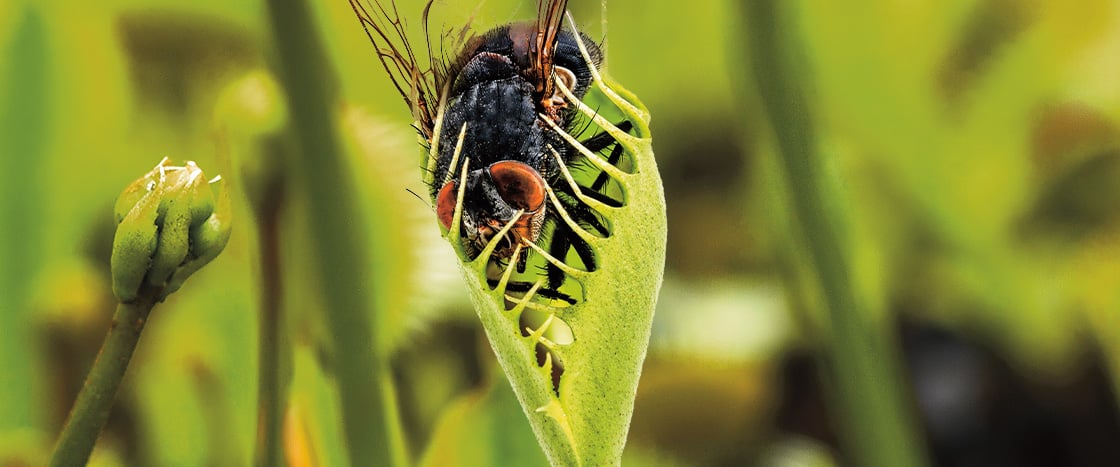

A hungry fly tiptoes across a sweet-smelling leaf, looking for a meal. Then, SNAP! The leaf closes, trapping the fly inside! This insect has been caught by a carnivorous plant—one that attracts and kills animals for food. There are more than 600 species of killer plants around the world.
Like all plants, carnivorous plants make their own food through photosynthesis. Powered by the sun’s energy, they combine water and carbon dioxide gas to make sugar. Plants typically suck up nutrients in soil through their roots.
Carnivorous plants grow in places like wetlands and bogs, where the soil is low in nutrients. To survive, these plants have developed the ability to feed on small animals. “It’s a way to get nutrients the soil can’t provide,” says Liane Cochran-Stafira. She’s a scientist who studies carnivorous plants.
Check out five deadly ways these plants capture their prey!
A hungry fly walks across a sweet-smelling leaf. It’s looking for a meal. Then SNAP! The leaf closes. The fly is trapped! A carnivorous plant has caught the insect. This kind of plant attracts and kills animals for food. More than 600 carnivorous plant species exist around the world.
Carnivorous plants make their own food just like other plants. They use a process called photosynthesis. It’s powered by the sun’s energy. This process combines water and carbon dioxide gas to make sugar. Plants usually suck up nutrients in soil through their roots.
Carnivorous plants grow in places like wetlands and bogs. There, the soil is low in nutrients. These plants have gained the ability to feed on small animals to survive. “It’s a way to get nutrients the soil can’t provide,” says Liane Cochran-Stafira. She’s a scientist who studies carnivorous plants.
Check out five deadly ways these plants capture their prey!