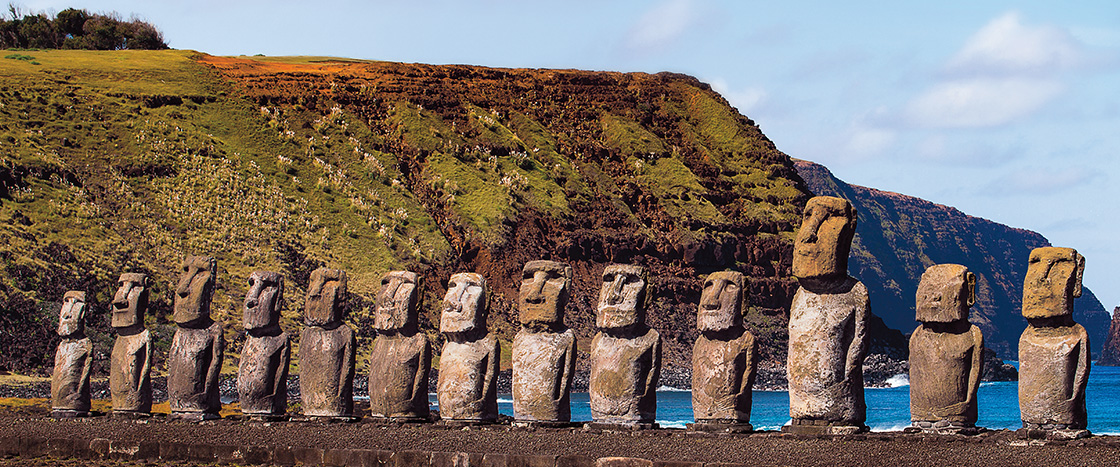

A tiny island sits in the middle of the Pacific Ocean. It’s extremely remote—the islanders’ nearest human neighbors are 1,300 miles (2,090 kilometers) away! Locals call the place Rapa Nui (RAH-puh NOO-ee). It’s also known as Easter Island. But the islanders aren’t alone out there. Nearly 1,000 giant stone figures called moai (MOH-eye) silently guard this distant land.
The people who settled the island about 800 years ago, also called Rapa Nui, carved the moai to honor their ancestors. They were a group of Polynesians, the Indigenous people of the islands in the central and southern Pacific. “The moai represent generations that have come before,” says Terry Hunt. He is a scientist who has studied Rapa Nui for 25 years.
“The people in Rapa Nui today still feel very strongly about the moai,” he says. But unfortunately, these powerful symbols of the past are at risk of disappearing.
A tiny island sits in the middle of the Pacific Ocean. It’s very remote. The islanders’ nearest human neighbors are 1,300 miles (2,090 kilometers) away! Locals call the place Rapa Nui (RAH-puh NOO-ee). It’s also known as Easter Island. But the islanders aren’t alone out there. There are also 1,000 giant stone statues called moai (MOH-eye). They silently guard this land.
People settled the island about 800 years ago. They carved the moai to honor their ancestors. They were Polynesians. They’re the Indigenous people of the islands in the central and southern Pacific Ocean. “The moai represent generations that have come before,” says Terry Hunt. He is a scientist. He’s studied the people and island for 25 years. “The people in Rapa Nui today still feel very strongly about the moai,” he says. But sadly, these powerful symbols of the past are at risk.