If you answered B, you’re right!
Every day, astronomers photograph and study dazzling objects in outer space. That includes the sizzling-hot star that gives us light: the sun!
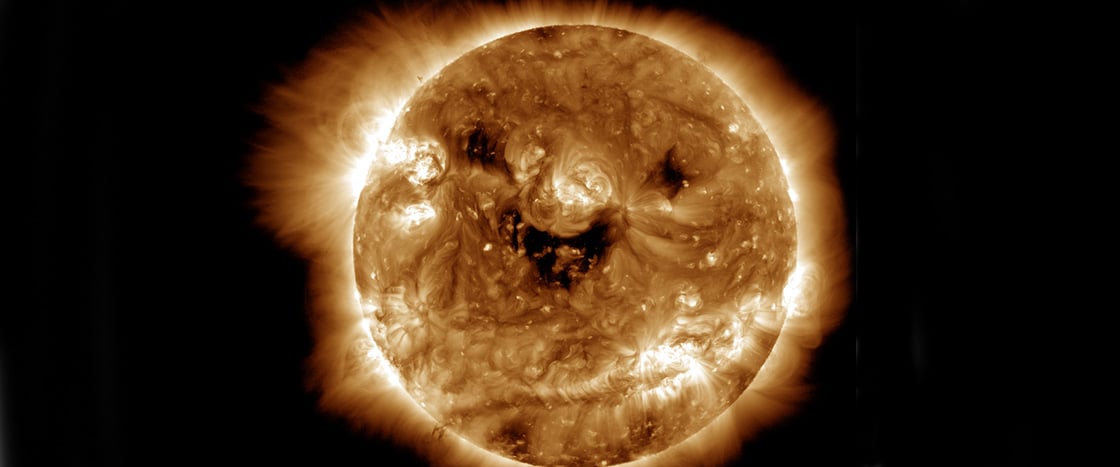
Most of the time, the sun looks like a fiery ball with dark swirls. In the first photo, the dark swirls look like two eyes and a smiling mouth.
The sun, like all stars, is made of a super-hot, glowing gas called plasma. It’s so hot that it doesn’t act like gases typically do. Plasma is always moving and churning, like a bubbling pot of soup.
What causes these dark spots? Different areas of the sun’s outer layer—called the corona—have different temperatures. In the first picture, the dark swirls and patches are cooler than the surrounding areas. This time, they showed up looking like a friendly face!
The gases that make up the sun could look like a cheerful smile at any time. But don’t go looking for it on your own. The only way to see these dark areas is through special telescopes that see light that our eyes can’t. It’s too dangerous to look directly at the sun.
Don’t worry, though—astronomers will let us know the next time the sun is flashing a silly expression!